


Stripe Onsite Interview (Hopeful pass) | Sharing exact details about Debug round

Summary
I went through Stripe's onsite interview process, which included Behavioral, Integration (Request Replaying), Debug (Mako templating library), and Coding (Email Subscriptions) rounds. The process felt different from standard LeetCode, focusing more on real-world coding and debugging skills.
Full Experience
🏢 Company: Stripe
Role: Software Engineer (Backend)
Round: VO
I couldn't find too much info on the onsite interview process on leetcode so I figured I'd share what I went through, for anyone else who has Stripe interviews coming up soon.
Behavioral
There was nothing super special about this round, just your usual BQ's like:
- challenge project
- why leave / why join
- leading + task assignment
- conflict with peer/manager
It's worth prepping with the star framework in advance so you can answer the common questions better. I really like this post if anyone want to learn more about it: https://leetcode.com/discuss/post/1729926/a-guide-for-behavioral-round-by-codecosm-ga31/.
Integration (Request replaying)
This one was pretty straight forward, just needed to implement a basic system to keep track of duplicate requests and not process them multiple times. You are expected to consolidate duplicate requests into one, and just process it once. You need to be able to parse json objects from a string and from a file and compare them to check to see if the request is a duplicate or not. It's worth practicing reading json data from files and comparing json objects for equality, but overall this was probably the easiest of all the rounds.
Debug (Mako)
This is a pretty unique round and looking for a completely different thing than a more traditional coding round.
You get access to a codebase of a templating library, Mako, and it has a few bugs in it that you need to track down. You get to run the code locally on your ide and it's mostly about showing the interviewer how you approach debugging. The codebase was pretty big, but there's tons of unit tests you can use to help narrow down what you're looking for. I was also able to find all the starter code for this on offerretriever. The test cases look like this: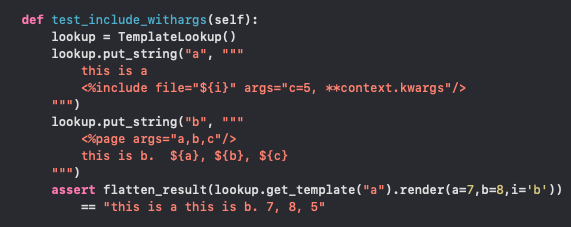
If you're like me and rely heavily on print statements to debug, I'd highly recommend taking some time to be familiar with how to use the debugger quickly in your IDE. The codebase is large and using a debugger is definitely faster than literring print statements all over code you're not familiar with.
Coding (Email Subscriptions)
Prompt was to build a system that sends subscription-related emails to users (subscribe/expired/reminders).
You're given a schedule as input on when to send these emails, a list of user subscriptions, and need to output the sending schedule.
This question is available on some question bank sites like this.
There's a couple of followups to this and I was able to finish the first one, but ran tight on time and wasn't able to finish the second follow up. Hopefully that was good enough...
Overall Experience
I think it went pretty well, Stripes interview process is pretty different than standard leetcode. They definitely feel like they're trying to screen out people who are only good at LC style problems and are trying to see how you would work on an actual codebase. Personally I like this, because I feel less likely to choke if I can't see the optimization to a DSA question right away. I think more companies will lean towards interview styles like this given the AI is getting too good at LC.
I'm still waiting to hear back but I think it went pretty well. If anyone else has interviewed recently, do you usually hear back pretty fast?
Interview Questions (4)
Common Behavioral Questions
Interview focused on typical behavioral questions, including topics like:
- Challenge project
- Why leave / why join
- Leading + task assignment
- Conflict with peer/manager
Duplicate Request Replaying System
Implement a basic system to keep track of duplicate requests and not process them multiple times. Consolidate duplicate requests into one and process it once. The system needs to be able to parse JSON objects from a string and from a file, then compare them to check for duplicate requests.
Debug Templating Library (Mako)
Given access to a codebase of the Mako templating library with several bugs. The task is to track down and identify these bugs. The process involves running the code locally, utilizing unit tests to narrow down issues, and demonstrating debugging approach in an IDE. The codebase is large.
Email Subscription System
Build a system that sends subscription-related emails (subscribe/expired/reminders) to users. Inputs include a schedule for sending these emails and a list of user subscriptions. The system should output the sending schedule.
Preparation Tips
For behavioral questions, I recommend prepping with the STAR framework in advance. For the integration round, practice reading JSON data from files and comparing JSON objects for equality. For debugging-focused rounds, it's highly recommended to familiarize yourself with using the debugger quickly in your IDE, as it's more efficient for large codebases than print statements.